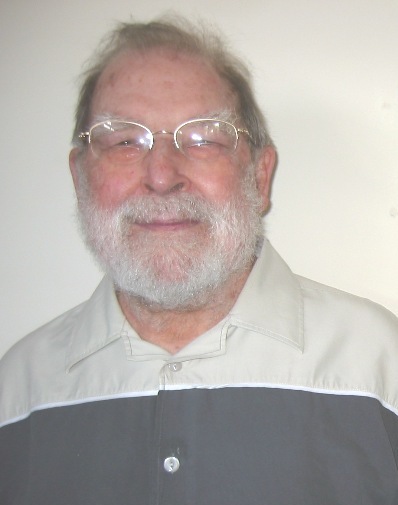
Sadly John passed onwards on Saturday 1 st May 2010
John Dickeson
My schooling was disrupted by the war although not as badly as many of my contemporaries. Evacuation of children from London at the outbreak of war in September 1939 caused a dramatic change to life when, aged 10, my elder brothers’ school was sent to Hawkley in
Hampshire. The attempt was made to keep family members together so although not being at the same school I accompanied my brother ( picture left Dick and myself in 1940) to Battersea Central School. The school system was different then in London and so I was moved from an elementary school to Battersea Central School, I subsequently learned that as I had passed the eleven plus examination I would have gone there anyway.
To stop many tearful farewells at the station mothers were allowed to take evacuees to school but not allowed to accompany them to the station, so nobody knew where or precisely when they were going.
A "Crocodile" of children complete with suitcases and gas masks, arrived at Clapham Junction station having no idea of our destination, we were then put on a train and eventually arrived at Petersfield in Hampshire, there we were sat in the church by the square for what seemed an interminable time. This was because there were no billeting areas sufficiently large to take us all. It was eventually decided to split the school, the majority going to Rowlands Castle and 50, of which I was one going to Hawkley. While sitting in the church I remember eating much of the supplies given to us to take to our billets, these were in an old fashioned brown paper bag with string handles containing, Jacobs cream crackers, then as now in the familiar orange wrapper, cheese, fruit and I believe a small bar of chocolate. Guess what went first!
Arriving at Hawkley we were met firstly by members of the local Women’s Institute who expecting dirty children from the east end of London were surprised that we were relatively clean and so did not need the baths that had been prepared for us. We were then divided up into small parties to be taken to billets, this was under the direction of the "Lady of the Manor" Mrs T.C. Davies who I eventually became to know quite well as I eventually ended up living in the servants quarters of the Manor House with seven others.
Our first "home" was at the vicarage at Empshott about 2.5 miles from Hawkley, however we only stayed there for about three weeks as the vicars housekeeper had stipulated that she only wanted girls and four boys were not to her liking. After being there three or four days we were feeling abandoned and so my brother being the eldest (13) decided to try to make contact with civilisation. Walking back to Hawkley he found that most of the other boys had been put to work hop picking as arrangements were still being made for us to go to school. We and the local school having half a day each eventually achieved this. While we were at Empshott reassuring letters sent home had not convinced mother that we were all right so she set off from Battersea on a Sunday to find us. This must have been an horrendous journey for her, being a Sunday there were no buses and we were 5 miles from the nearest station at Liss. The signposts at one road junction had been turned round (probably by those terrible evacuees) so a considerable distance was added to her walk. A few weeks later signposts were all removed so that any invading enemy troops could not know where they were. Mother eventually found us but could only stay a short while, as she had to set out on the return journey almost immediately. An extremely long walk for someone used to living in London and hopping on a bus where needed.
The population of Hawkley was 50 in all and so when we arrived it was doubled overnight, fitting us all in must have been very difficult for the billeting officer. For the first 18 months there was very little enemy action and it became known as "The Phoney War" so many evacuees decided to return home, relieving pressure on accommodation a little. This was reversed when the Blitz started and those then wishing to be re-evacuated were sent further away.
After leaving Empshott my brother and I were very fortunate to be put in the servants
quarters at the manor house "Hawkley Hurst" (left), this was only one mile from school instead of the previous two and a half, and the living conditions were vastly improved. We also had the whole of a very large estate to play on. The boys at the Hurst experienced the "Upstairs Downstairs" life as it was later portrayed in the television programme.
Even the butler’s name was Mr. Hudson. He was an imposing figure in morning dress, but became very friendly to the boys as long as they behaved themselves. A very impressive duty of his was to ring the gong twice each evening to let the guest’s for dinner know that it was time to dress, and then to be seated. There was a cook, various maids (tweenies), and even an ancient retainer in residence, who used to be the children’s nurse even though the children were now adults and moved away, some on active service. The outside staffs were head gardener and several under gardeners, and a chauffeur who wore a uniform with monogrammed buttons. This was even after many had been called up. A green baize door separated us from the "front of the house" which we were forbidden to enter unless by specific invitation. There was a servant's hall where the staff ate and enjoyed a little leisure, but we ate in a room set aside specifically for us. A lady named Miss Imms was employed to keep us in order, who left to join the Auxiliary Fire Service. I remember before she left we joked that she was going to keep the firemen in order just as she had treated us.
There were a few restrictions though, we had to go to church twice each Sunday, confirmation classes were attended, and I was "volunteered" for the choir, so choir practice took up more of our valuable time.
Hawkley Hurst was a large mansion and we were very well provided for. Previously central heating was unknown to us, also baths whenever we wished was a great change from the galvanised one we had at home, filled once a week in the scullery, with water from the washing boiler. Mrs Davies also read to us very often on Sunday afternoons, "Children of the New Forest" and "Treasure Island" are two books I remember. As the "Davies" children were all grown we were also allowed to play with many of their games. Bows and Arrows with real straw targets were very popular; also croquet on the lawn was introduced to us, we never even new such a game existed.
Unfortunately one of the sons was lost in the Atlantic where he was a serving officer on a destroyer; the only thing recovered was his cap, found floating by the rescuers.
The change from London life to the country was very large and I believe was beneficial to me. It was not long before I was able to harness a horse and learn many other rural accomplishments. Because of the war many men being called up, there was a labour shortage. We sometimes helped out on the farm to earn a little pocket money for when we went home for holidays. Two weeks out of our six weeks summer holidays were split between the farm, the gardens, and the carpenter's shop where I remember once helping to make a five bar gate. On the farm we docked thistles, stooked cereals and helped with haymaking, if we were good in the garden we sometimes were rewarded with a peach from the greenhouse. A great delicacy as there was no bananas or oranges due to wartime restrictions.
About this time I was moved to another billet in the village away from my friends at the Hurst, then again to Hawkley Mill for a further spell. I found out that was because the ladies had specified that they wanted a good boy to live with them, at the next opportunity I asked Mrs Davies "why was I being punished for being a good boy" this was successful because I was never moved again.
The war did not interfere much with our lives, in fact at times it was quite exciting for a young teenager. We used to lie out in fields watching "Dog Fights" above our heads heedless of cartridge cases falling down, which we used to collect after a while as they were too hot to pick up immediately. Once my brother and I were asked to go to a local farm which had suffered an incendiary bomb attack where we looked for them and covered any found with earth to stop them igniting. A train I was travelling in back from a visit home was machine gunned by an enemy fighter; fortunately my part of the train was not hit. Another time a stick of High Explosive bombs was jettisoned across the estate but the only damage was to an oak tree blown to the ground.
This caused a most unusual happening for us. Among our many pursuits we had become fairly skilful at catching rabbits in snares, (Legal in those days). These we sent home to mother to help out the meat ration, they became so regular that the postman used to say to mum "your rabbit is here again". Anyway back to the fallen oak, we set a snare over a run in the tree and on returning the next day were very surprised to see a grey squirrel caught in it. Probably the only time a squirrel had been caught in such a way. There was also a bounty of two pence given for rats’ tails by the Ministry of Agriculture during the war. "benders" caught these, which are hazel branches set in such a way that they spring up when a snare is tripped. One good thing about rats’ tails is that they do not deteriorate if kept in a tin so when the Ministry of Agriculture man came we took the money for them then kept the tails to be used again for more bounty.
Digging for Victory was very popular and some of us boys had plots to grow vegetables in where we learned a lot about horticulture. One Christmas time I had some brussels sprouts and leeks growing that I wanted to take home for my visit, unfortunately when going to dig them up the ground was frozen hard, I struggled with this for quite a while and then the local vicar appeared who had seen me from the vicarage window. He had very kindly bought across a pickaxe so the job was soon done. Perhaps it helped that I was one of his choirboys.
Other happenings connected to the church were when once I struggled to lift up my cassock to get a penny from my pocket for the collection plate, to my horror in the vestry I found that my fare money home of five shillings was half a crown short. Asking for it back it was found there were two half crowns in the collection, the other being put in by the Lord of the Manor, who was counting the money, so after exchanging my penny, and I could afford to go home the next day. Harvest festival one year caused a very big furore, along the front of the choir stall were hung some large bunches of grapes, these were a great temptation for the front choristers so during the sermon we lifted a bunch over the top of the stall and were surreptitiously eating them. An altercation caused the stall to overbalance in the aisle with a great crash and much squashing of fruit, and Prayer and Hymn books all over the floor.
During the shooting season there was an opportunity to earn some money by going beating to frighten the pheasants up for the guns. For this we received the princely sum of 5 shillings and also lunch in a barn, everybody regardless of age was given a quart bottle of Brown Ale to drink quite a mouthful for a 13-year-old.
An Army Cadet Force unit was started in the village by one of our teachers (Mr. King), this was very popular at the time, eventually being issued with uniforms and learning to shoot on a range was enjoyable. We were also used by the Home Guard as cycle messengers.
One exercise after delivering a message an Officer acting as an Umpire said that a shell had landed on the position and I was deemed to have been wounded in the legs, signified by a label tied to my uniform. Promptly taken back to the village hall on a stretcher the local ladies being trained, as emergency nurses wanted to cut my uniform trousers off. I strongly objected to this and jumping up off the stretcher removed them myself. They were then very happy to swath my legs in bandages and receive congratulations from their instructors.
D-day was on June the 6th 1944 and it was marked for me by the sudden appearance of all British planes in the sky marked with three black stripes painted on each wing as a means of identification, it must have been an absolutely mammoth job to achieve this virtually overnight.
After four and a half years I returned to London in August 1944 to start the next phase of my life, getting a job and being just in time for the attacks from the Buzz Bombs (left) and Rockets. Looking back it seems incredible to me how people acted during these trying times, there was a determination to "Carry on regardless" and to continue as if these things were not of much importance in our lives. I remember once being blown off my bicycle when a number of us were going camping, all the shop windows were blown out around us but not being injured ourselves we continued on our journey to Ripley in Surrey to the camp site, where we spent a weekend under canvas.
I started work at a printers, in Southfields, South West, London and as I was a very junior member of staff was placed on the roof as a "Buzz Bomb or Doodlebug" spotter, this was because the air raid warnings were so frequent and covered the whole of London but bombs were often a long way away. So with my open line telephone, I was half-asleep at my post on a lovely sunny day when suddenly looking up I saw a silent flying bomb approaching. This was most unusual as normally the engines were very loud and when they stopped the bomb came to earth and exploded. This one however was gliding directly towards a tall chimney in the laundry next door, a gust of wind must have caught it because it veered away so close overhead that I could see the rivets holding the plates it was made of, went about a mile further where it blew up. Meanwhile I phoned down to the office that "there is one gliding" this was misheard as "one diving" so causing a bit of a panic.
The Rockets were another secret weapon Hitler brought to bear on London, the first of these landed in Chiswick and the rumour went about that it was a gas works that had exploded, later the truth was known. The nearest one to home happened soon after going to bed one night when after the explosion about half a mile away it sounded as if a large building had fallen down, not being in a position to do anything about it I turned over and went to sleep. Subsequently we found that the noise after the explosion was the sound of the rocket coming as it flew faster than the speed of sound.
Going to night school and rejoining the army cadets again kept me busy. In the cadets I learned to play Rugby Football and the team evolved into the Battersea Ironsides Rugby Football Club who are still in existence, I was honoured to become President. On May the 8th 1947 I joined the army to do my National Service, becoming 19169863 Private Dickeson J. of the Queens Own Royal West Kent Regiment, but that is another story.
Text © - John Dickeson.
17 Fordwater Gardens, Yapton, Arundel. BN18 OHU.
Telephone: 01243 551976.
While on line and having a little time to spare thought I would up date you on a promise made last year (2004) to write a little more about my Hawkley stay, prompted by Charlie Salmonds piece on the web. He mentions “Johnny Yates small bike” and I can add a little to this because when John left school I purchased this bike from him. The bike had 24 inch wheels so was smaller than the normal 26 inch wheel ones. I cannot remember whether I paid 5 shillings or half a crown (2/6p) but I must have been well off at the time to be able to do it. It was certainly useful to me on the remainder of my stay; being able to cycle the mile to school from the Hurst was a great time saver. I must have nearly worn it out as I can’t remember passing it on to anyone else when leaving school. I do remember it having no brake blocks after a while and not being able to replace them either through impecunity or they were not available due to the war. I overcame this by using my gumboots to brake by putting them on the rear fork and pressing them onto the wheel, this was a good temporary measure but I soon wore a hole through my boots and they were no longer waterproof, it also made my heel sore.
Having no brakes was an advantage when going down the hill from Lower Green and up the other hill back to the Hurst without having to peddle, it was perhaps fortunate for me that wartime restrictions also reduced the traffic. I also became very adept at mending punctures, using table spoons ‘borrowed’ from the dining hall as tyre levers.
Another advantage of having the bike was that I was recruited as a Home Guard messenger and had the adventure recounted in my previous piece on the web.
John updated 6 May 2005

5th March 2003
Dear Harry,
Thanks for your letter, I already have the date for the re-union in my diary and have every intention to come, health permitting. It is only about 30 miles from here to Hawkley, I have been there a couple of times since leaving school and each time am amazed at how little change there is.
It was fortuitous that I found out about the re-unions, I was playing bowls at Graffham and my opposite partner knew of Hawkley, when I said that I had been evacuated there he said that there had been mention of the re-union in the previous weeks Petersfield paper, he was kind enough to send the cutting to me where I found Cliff’s Email address. The piece on the web site I had originally written for the Imperial War Museum as they had asked for wartime reminiscences especially with regard to evacuation. When asked for some words I sent a copy on, which you have obviously read. Reading it again I realised that I had not mentioned much about school but I hope it was of interest to some. The War Museum wrote a letter back thanking me and said it is now in their archives.
To answer your questions, the printers I worked for were only a small firm of about a dozen employees. They were "Baker and Witt Ltd", Standen Road, Southfields. I left there in 46 then worked again at a printers in Clapham until call up in 47. After National Service still worked in printing until aged 21 was able to get a job on various newspapers where I stayed until being made redundant in 1987. I still have a slight connection with papers; I am the local correspondent for the Bognor Regis Observer and the Brighton Evening Argus so send reports of happenings in the villages of Yapton and Ford.
My brother Dick who unfortunately died in 1999 had emigrated to Brisbane in Australia, not Melbourne, returned after a couple of years because the children were suffering from the heat. I see that one of the pieces on the web mentions the writer meeting up with Dick when he was in the Royal Marines.
I had a most interesting meeting with Ricky Bartlett an ex England rugby player who was guest of honour at the Battersea Ironsides Rugby Clubs 50th anniversary dinner. I am the club president so we occupied the top table together. He mentioned returning to Hawkley that evening after the dinner and said that he lived in the butler’s house on the Hurst estate. This led to many questions about the past on the estate and I was invited to pay a visit, I was planning to go when I saw a notice in the paper that a memorial service was being held for him, so the opportunity was missed.
Looking forward to meeting up with you on the 5th of July,
John Dickeson